
Edo Period Currency Fragmentation and Clan Note Issuance (1700, 1871)
| Era / Year | Event / Metric | Gold Content Reduction | Silver Content Reduction | Market Impact |
|---|---|---|---|---|
| Genroku (1695) | Major Recoinage | 32. 0% | 20. 0% | Inflation; Gresham's Law (bad money drove out good). |
| Tenpo (1837) | Famine Relief / Deficit | 46. 0% | 38. 0% | Severe inflation; rise in hansatsu issuance. |
| Ansei (1859) | Port Opening emergency | N/A | N/A | Japan Gold/Silver Ratio 1: 5 vs World 1: 15. Massive gold outflow. |
| Man'en (1860) | Emergency Adjustment | 56. 0% | N/A | Tripled money supply; price revolution. |
The system collapsed following the opening of Japanese ports to Western trade in 1859. Foreign merchants immediately identified a massive arbitrage opportunity. The domestic exchange rate in Japan valued silver highly, with a gold-to-silver ratio of 1: 5. The international standard, yet, was roughly 1: 15. Foreign traders brought Mexican silver dollars to Japan, exchanged them for Japanese silver tokens, converted those into gold *koban*, and exported the gold for a guaranteed 200 percent profit. This "Gold Rush" drained Japan of its gold reserves within months. The Shogunate responded with the Man'en recoinage of 1860, reducing the gold content of the *koban* by two-thirds to align with international rates. This drastic measure halted the gold outflow triggered hyperinflation, with domestic prices rising nearly 300 percent in Kyoto and Edo between 1860 and 1867. When the Meiji government seized power in 1868, it inherited this monetary disaster. The new administration possessed no tax revenue and faced immediate civil war costs. Its solution was to replicate the mistakes of the clans: it issued its own inconvertible paper money, the *Dajokan-satsu*. Issued in 1868 with a circulation term of 13 years, these notes were fiat currency with no metal backing. The public, burned by centuries of debasement and worthless clan notes, treated the *Dajokan-satsu* with deep suspicion. The notes traded at a discount of up to 60 percent against specie in 1869. The failure of the *Dajokan-satsu* demonstrated that political legitimacy alone could not sustain a currency. The Meiji leaders realized that without a centralized method to regulate supply, convertibility, and banking standards, industrialization was impossible. The chaos of 1, 694 different clan notes, combined with the collapse of the *Dajokan-satsu*, forced the government to adopt the New Currency Act of 1871. This act formally abolished *hansatsu* (though exchange continued until 1879) and established the Yen. Yet, the banking infrastructure remained primitive. The National Bank Act of 1872 attempted to create a decentralized American-style system of national banks, this too resulted in inflation and instability. The lesson from 1700 to 1871 was clear: a fragmented monetary system controlled by private merchant interests and debt-ridden local governments leads to inevitable debasement. The *ryogae-sho* had served their purpose as private arbiters, they could not support a modern nation-state. The stage was set for the creation of a single, entity capable of monopolizing the issuance of money, a monopoly that would eventually manifest as the Bank of Japan in 1882. The 170 years of Edo fragmentation provided the negative proof that a central bank was not an option, an operational need for survival in the global economy.
Establishment of the Bank of Japan and the Matsukata Deflation (1882)

| Metric | 1881 (Peak Inflation) | 1886 (Stabilization) | Change |
|---|---|---|---|
| Money Supply (Million Yen) | 153. 3 | 119. 2 | -22. 2% |
| Rice Price (Yen per Koku) | 10. 48 | 4. 61 | -56. 0% |
| Raw Silk Price (Yen per 100 kin) | 860 | 460 | -46. 5% |
| Interest Rates (Tokyo Market) | 14. 0% | 8. 5% | -5. 5 pts |
The "Matsukata Deflation" achieved its monetary goals devastated the rural economy. The land tax, the government's primary revenue source, was fixed in cash, not commodities. When the price of rice collapsed by 56%, the real tax load on farmers more than doubled. A farmer who needed to sell one koku of rice to pay his taxes in 1881 had to sell over two koku in 1884 to meet the same obligation. This arithmetic destroyed the Japanese independent peasantry. Between 1883 and 1885, over 200, 000 farm households went bankrupt. Land was confiscated and consolidated into the hands of wealthy "parasitic landlords" (*kisei jinushi*), creating a tenant farming class that would define Japanese agriculture until the post-WWII land reforms. The economic violence provoked armed resistance. In November 1884, thousands of indebted farmers in Chichibu, Saitama Prefecture, stormed government offices and money lenders' homes. The **Chichibu Incident** was not a riot a desperate insurrection against the BOJ's monetary asphyxiation. The army crushed the rebellion, and seven ringleaders were hanged, their deaths a direct collateral damage of the drive for currency stabilization. Matsukata remained unmoved. He sold off government-owned industries, cement, glass, mining, to private cronies at fire-sale prices to raise cash and reduce state expenditure, a move that birthed the *zaibatsu* conglomerates (Mitsui, Mitsubishi). By 1885, the paper yen reached parity with silver. The Bank of Japan issued its convertible banknotes that same year, featuring the god of wealth, Daikokuten, an ironic choice given the poverty the stabilization had inflicted on the countryside. The establishment of the Bank of Japan in 1882 was thus an act of centralization that prioritized the credibility of the state over the livelihood of its citizens. It established a precedent that: the central bank as the guardian of the currency's external value, to tolerate severe domestic pain to maintain international standing. The deflation of the 1880s was the crucible in which the BOJ's institutional DNA was forged, rigid, orthodox, and insulated from the screams of the market.
The Nihonbashi Main Building: Neo-Baroque Architecture and Seismic Reinforcement
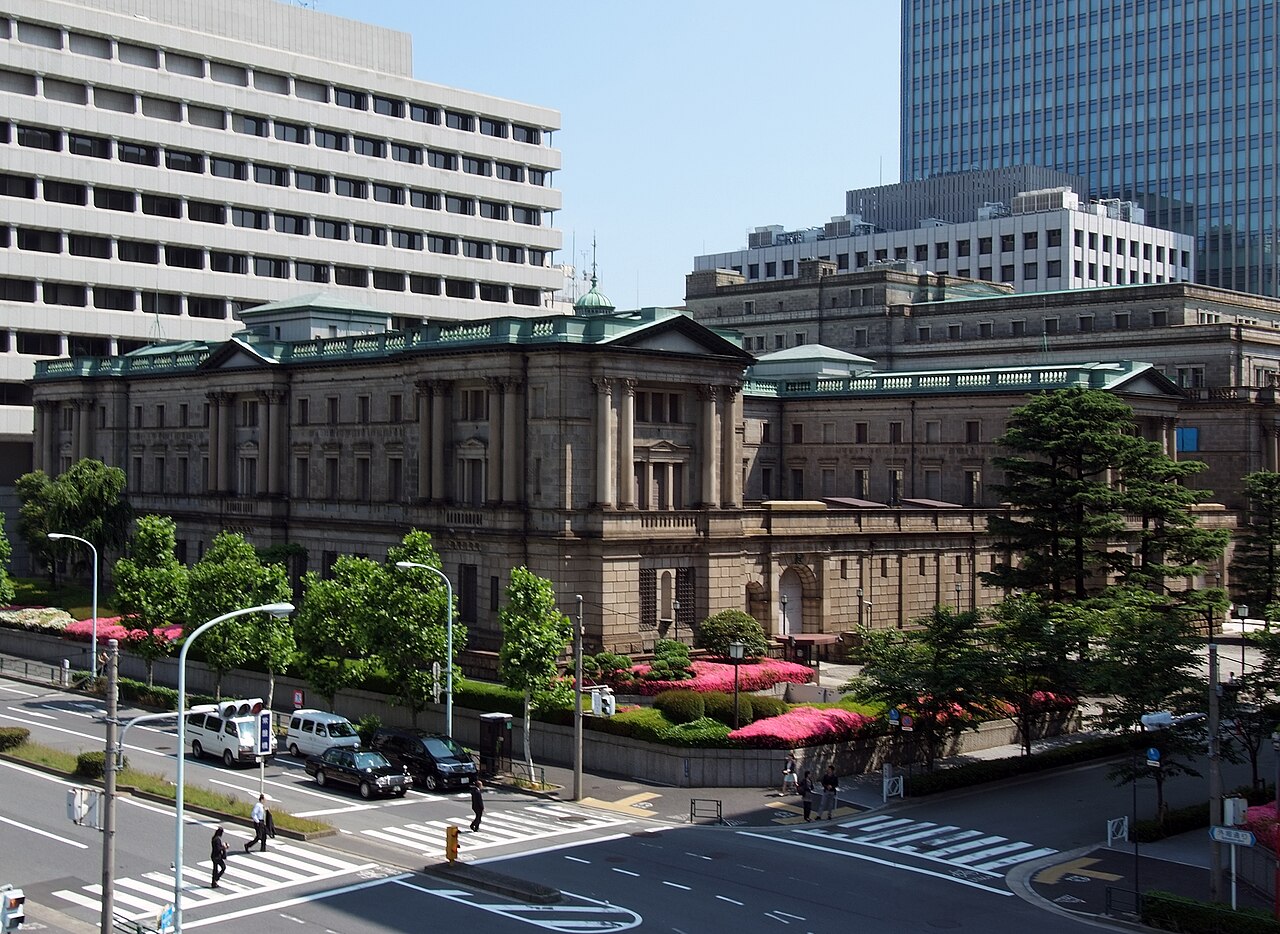
The Bank of Japan's Nihonbashi Main Building is not a financial headquarters; it is a of currency designed to withstand both tectonic and economic upheaval. Commissioned in 1890 and completed in 1896, the structure was the magnum opus of Kingo Tatsuno, the Japanese architect to design a major national institution using Western principles. Tatsuno, a student of the British architect Josiah Conder, traveled extensively to study the National Bank of Belgium and the Bank of England before drafting his blueprints. He rejected the wooden architecture that defined the Edo period, opting instead for a Neo-Baroque monolith constructed of stone and brick, intended to project the permanence of the yen in a rapidly modernizing world. The project was a massive financial undertaking for the Meiji government; the total construction cost swelled to approximately 1, 120, 000 yen, a sum in 1896, exceeding the initial budget by 40 percent.
The building's layout has long been the subject of urban legend. Viewed from above, the Main Building appears to form the kanji character for "yen" (円). While this geometric coincidence delights tourists, historical analysis suggests it was unintentional; the character used for the currency at the time was the more complex 圓, and the shape likely resulted from the pragmatic need to enclose a central courtyard for security and light. The structure itself is a hybrid of imported and domestic materials. The lower floors are clad in granite, while the upper stories utilize lighter andesite and brick, a decision that balanced aesthetic grandeur with structural load management. This heavy masonry construction was a radical departure from traditional Japanese building methods, yet it was engineered with a foresight that would soon be tested by catastrophe.
On September 1, 1923, the Great Kanto Earthquake leveled much of Tokyo, destroying nearly 300, 000 buildings and killing over 100, 000 people. The Bank of Japan Main Building was one of the few structures in the Nihonbashi district to remain standing. Its strong stone walls and deep foundations survived the magnitude 7. 9 tremors with minimal structural compromise. yet, the earthquake triggered firestorms that swept through the city. The bank was not spared; flames engulfed the central dome and gutted several floors, destroying interiors and furniture. even with the inferno, the vault remained intact, and the bank resumed operations within days, reinforcing its image as the unshakeable core of the Japanese economy. The dome was subsequently reconstructed, minus of its original ornate decoration, serving as a scar and a symbol of resilience.
Beneath the Neo-Baroque exterior lies a subterranean designed with extreme paranoia. The underground vaults, dating back to the 1896 construction, were built to protect the nation's gold bullion and hard currency from every conceivable threat. In 1932, security was upgraded with the installation of massive vault doors manufactured by the American firm York Safe & Lock. These doors, 90 centimeters thick and weighing 25 tons, were so precise that a single person could swing them shut. Security from the era reveal a drastic last resort: the vaults were reportedly engineered with a method to flood the chambers using water from the adjacent Nihonbashi River. In the event of a mob or an invasion, the bank could drown its own currency to prevent theft, a feature that highlights the desperate lengths the state was prepared to go to deny its assets to enemies.
As the 21st century method, the Bank of Japan faced a new engineering challenge: how to protect this aging masonry heavyweight from the predicted "Big One," a massive earthquake expected to strike Tokyo directly. Between 2016 and 2019, the bank undertook a seismic isolation retrofit of the Main Building, a project of immense technical difficulty. Engineers could not simply bolt supports to the walls; they had to cut the building free from its foundation. The entire 75, 000-ton structure was jacked up, and seismic isolation bearings, laminated rubber cushions, were inserted beneath the existing stone columns. This base isolation technique allows the historic building to float independently of the ground during a quake, reducing the seismic energy transferred to the structure. This retrofit ensures that the 19th-century shell can survive 21st-century seismic events without the catastrophic damage seen in 1923.
In 2026, the Nihonbashi Main Building stands as a functional anachronism. While modern skyscrapers in Tokyo rely on flexible steel and computer-controlled dampers, the BOJ headquarters relies on mass and retrofitted base isolation. It remains the operational heart of Japan's monetary policy, housing the Governor's office and the policy board. The contrast is clear: inside, officials grapple with digital currencies, interest rate fluctuations, and the complexities of the modern global economy, while the walls around them speak of a time when stability was measured in granite and gold. The building is an Important Cultural Property, yet it is not a museum; it is a working machine, fortified against the earth itself, continuing its 130-year mission to anchor the value of the yen.
The February 26 Incident and the Assassination of Takahashi Korekiyo
The surrender of the Bank of Japan's independence did not occur in a boardroom or through a legislative vote; it happened at gunpoint on a snowy morning in Akasaka. To understand the central bank's total subjugation during the Second World War, one must examine the fiscal constructed by Finance Minister Takahashi Korekiyo and the violent consequences of his attempt to it. Takahashi, frequently termed the "Japanese Keynes," saved Japan from the Great Depression in 1932 by breaking a cardinal rule of central banking: he ordered the Bank of Japan to directly underwrite government deficit bonds.
This policy, initiated on November 25, 1932, was designed as a temporary stimulus. The Bank of Japan purchased government bonds directly, injecting cash into the economy, which the government then spent on rural relief and military modernization. The plan worked with lethal efficiency. Japan exited the depression years before the West, with industrial production surging and interest rates falling. Yet, this method created a dangerous dependency. The Imperial Japanese Army, expanding its aggression in Manchuria, viewed the Bank of Japan not as a monetary authority, as an inexhaustible well of funding for imperial expansion.
By 1935, the Japanese economy showed signs of overheating. Takahashi, a fiscal realist, recognized that the emergency phase had passed. He publicly warned that continued deficit financing would lead to vicious inflation and ruin the nation's credit. In the budget negotiations for 1936, he slashed the Army's demand for funding, declaring that Japan's industrial base could not support further military expansion without collapsing the currency. This refusal to print more money signed his death warrant.
In the early hours of February 26, 1936, the "Young Officers" of the Imperial Way Faction (Kōdō-ha) launched a coup d'état intended to "restore" the Emperor to power and purge the government of corrupt elites. A squad of approximately 120 soldiers from the 3rd Imperial Guard Regiment stormed Takahashi's residence in Akasaka. They found the 81-year-old minister asleep. Screaming "Tenchu!" (Heaven's Punishment), they shot him five times and slashed him with swords. The assassination of the Finance Minister was not a political homicide; it was the physical elimination of the only barrier between the Bank of Japan's printing press and the military's war machine.
The coup failed, yet the rebels achieved their fiscal objective. The military took control of the cabinet formation process. Baba Eiichi, a bureaucrat to accommodate the military's demands, succeeded Takahashi as Finance Minister. Baba immediately abandoned Takahashi's discipline. He formulated a "quasi-wartime" budget that exploded government spending, financed almost entirely by forcing the Bank of Japan to absorb massive bond issuances. The central bank, stripped of its political shield, ceased to function as a regulator of currency and became a logistical arm of the Ministry of War.
The shift in fiscal reality was instantaneous. Under Takahashi, the Bank of Japan sterilized bond purchases by selling them to commercial banks, keeping inflation in check. Under Baba and his successors, this "selling operation" collapsed because the market could not absorb the sheer volume of debt required for the invasion of China in 1937. The Bank of Japan was forced to hold the debt, expanding the money supply without limit. The following data shows the immediate of fiscal control following the incident.
| Year | Military Spending (Million Yen) | % of Total National Budget | Fiscal Policy Stance |
|---|---|---|---|
| 1931 | 434 | 29. 4% | Austerity (Pre-Takahashi) |
| 1932 | 686 | 35. 1% | Takahashi Stimulus Begins |
| 1935 | 1, 023 | 46. 0% | Takahashi Attempts Cuts |
| 1936 | 1, 078 | 47. 2% | Assassination / Baba Finance |
| 1937 | 3, 271 | 68. 9% | Full War Economy (China Invasion) |
The assassination of Takahashi Korekiyo marked the point of no return. The Temporary Fund Adjustment Act of 1937 formalized this subservience, legally binding the financial system to the war effort. Wholesale prices, which had remained stable under Takahashi even with stimulus, began a vertical ascent, doubling between 1936 and 1940. The Bank of Japan had lost the ability to say "no," a structural weakness that would result in the hyperinflation of the immediate post-war period and haunt the institution's institutional memory into the 21st century.
Wartime Finance and the 1946 New Yen Deposit Blockade
The fiscal discipline of the Japanese state did not die in a boardroom; it died in a bedroom. On February 26, 1936, rebel army officers assassinated Finance Minister Takahashi Korekiyo, the "Japanese Keynes" who had masterfully navigated the Great Depression. Takahashi had committed the fatal sin of suggesting that military spending be curbed. His murder sent a chilling message to the Bank of Japan (BOJ) and the Ministry of Finance: fund the Imperial Army's ambitions or face physical elimination. Following this event, the central bank ceased to function as a guardian of currency stability and became a logistical arm of the military, printing money to underwrite the invasion of China and the subsequent Pacific War.
The legal framework for this servitude was codified in the Bank of Japan Law of 1942. Modeled on the statutes governing the Reichsbank in Nazi Germany, this legislation stripped the BOJ of its remaining autonomy. Article 1 explicitly abandoned the gold standard's discipline, mandating that the bank's purpose was to operate "in accordance with national policy" to support the war effort. The law abolished the requirement to convert banknotes into specie, removing the ceiling on currency issuance. Under Governor Toyotaro Yuki, the BOJ began directly underwriting government bonds, a practice previously considered taboo. By the war's end in 1945, the central bank held over 43 percent of the national debt, and the volume of banknotes in circulation had exploded from 2. 5 billion yen in 1937 to nearly 30 billion yen.
The surrender in August 1945 did not stop the printing presses; it accelerated them. In the chaotic months following the defeat, the Japanese government engaged in a desperate payout of "extraordinary military expenditures" and "war insurance" claims to munitions companies. This final burst of liquidity, intended to prevent corporate insolvencies, flooded a shattered economy where goods were nonexistent. Industrial production had collapsed to one-tenth of pre-war levels, yet the money supply ballooned. Between August 1945 and February 1946, the amount of currency in circulation doubled again, reaching 61. 8 billion yen. Prices followed suit, with black market rates for rice and fuel soaring to 30 times the official controlled prices. This phenomenon, known as "macaroni inflation," threatened to render the yen worthless.
Faced with the prospect of total monetary collapse, the government, under the guidance of the Supreme Commander for the Allied Powers (SCAP), executed one of the most draconian financial interventions in modern history: the Emergency Financial Measures Ordinance of 1946. On the evening of February 16, the government announced a "Deposit Blockade" (Yokin Fusa). The directive was absolute. All existing bank deposits were frozen. The circulation of "Old Yen" notes would be banned after March 2, 1946. To survive, the population had to deposit their cash holdings into blocked accounts, from which they could withdraw only small, strictly rationed amounts in "New Yen."
The mechanics of the blockade were brutal in their simplicity. The BOJ and the Ministry of Finance seized the liquid wealth of the nation. Heads of households were permitted to withdraw only 300 yen per month, with an additional 100 yen allowed for each family member. At the time, 300 yen could barely purchase a few days' worth of food on the black market. The policy aimed to forcibly contract the money supply and crush inflation by physically removing cash from the hands of consumers. It was a monetary reset button, designed to wipe out the wartime liquidity overhang in a single stroke.
| Date | Banknotes in Circulation (Billions of Yen) | Status |
|---|---|---|
| February 16, 1946 | 61. 8 | Pre-Blockade Peak |
| March 12, 1946 | 15. 2 | Post-Blockade Low |
| September 30, 1946 | 64. 4 | Rebound Level |
| December 31, 1946 | 93. 4 | Inflation Returns |
For the Bank of Japan, the logistics of the switch were a nightmare. The new banknotes, printed hastily and absence security features, were not ready in sufficient quantities., the bank had to resort to applying small stamps to old banknotes to validate them as "New Yen" temporarily. The blockade succeeded in its immediate technical goal: the note problem collapsed from 61. 8 billion yen in mid-February to 15. 2 billion yen by mid-March. For a brief moment, the fever broke. Yet, the victory was illusory. The government continued to run massive deficits to fund reconstruction and occupation costs, and the BOJ was forced to resume lending to the government and the Reconstruction Finance Bank.
The blockade was not a monetary tool; it was an instrument of wealth confiscation. By freezing deposits, the state prepared the ground for the Capital Levy Law (Property Tax Law), passed later in 1946. This one-time tax targeted the frozen assets of the wealthy, with rates as high as 90 percent on large fortunes. The combination of the deposit freeze, the forced conversion to New Yen, and the subsequent capital levy liquidated the pre-war upper class and the landlord class. It leveled the economic terrain, destroying the financial power of the zaibatsu families and the rural gentry, thereby setting the stage for the relatively egalitarian society that would emerge in the 1950s.
The failure of the blockade to permanently halt inflation became clear within months. By September 1946, currency in circulation had surpassed pre-blockade levels, driven by the government's inability to balance its books and the BOJ's continued credit expansion. Prices resumed their upward march, eroding the value of the "New Yen" just as they had the old. It was not until the implementation of the Dodge Line in 1949, a strict austerity program imposed by Detroit banker Joseph Dodge, that the BOJ was forced to stop underwriting government debt and true stability returned. The 1946 blockade remains a scar on the Japanese shared memory, a moment when the state proved it could and would lock the doors to the bank vaults to save the system, leaving the citizenry to survive on scraps.
Window Guidance Operations and the Inflation of the 1980s Asset Bubble

| Year | Official Discount Rate | Window Guidance Policy | Economic Outcome |
|---|---|---|---|
| 1985 | 5. 0% → 3. 5% | Shift to expansionary quotas | Yen appreciates (Plaza Accord); Export fears |
| 1986 | 3. 5% → 3. 0% | Aggressive lending set | Stock market begins rapid ascent |
| 1987 | 2. 5% (Historic Low) | Quotas exceed real demand | Land prices in Tokyo skyrocket |
| 1989 | 2. 5% → 4. 25% | Guidance remains loose until late year | Nikkei peaks at 38, 915; Bubble maximizes |
The intent behind this forced inflation remains a subject of intense investigative scrutiny. Economist Richard Werner, in his analysis of the period, that the bubble was not an accident a deliberate strategy devised by a faction within the BOJ and the Ministry of Finance, aligned with the goals of the Maekawa Report. Released in April 1986 by former BOJ Governor Haruo Maekawa, this report called for a "historical transformation" of Japan's economy from export-led growth to domestic demand. The "Princes of the Yen", the unelected bureaucrats running the central bank, understood that the entrenched political and corporate interests (*keiretsu*) would never voluntarily the export model. A massive asset bubble, followed by a controlled collapse, would destroy the financial independence of these corporations and force the structural reforms that politicians could not legislate. The mechanics of the bubble support this theory. The BOJ maintained the 2. 5 percent discount rate for over two years, ignoring clear signals of overheating. Land prices in Tokyo tripled, and the theoretical value of the Imperial Palace grounds famously exceeded the value of all real estate in California. Golf club memberships traded for millions of dollars. This hyper-inflation of assets was directly fueled by the new money created by banks under BOJ orders. When the banks complained that there were no creditworthy borrowers left, BOJ officials reportedly told them to lend to anyone who would take the money. The end of the bubble was as calculated as its beginning. In December 1989, Yasushi Mieno, a career central banker known as the "inflation fighter," took the governorship. Mieno immediately began tightening policy, raising rates and, more importantly, restricting Window Guidance quotas. The stock market crashed on the trading day of 1990. By the time the BOJ formally abolished Window Guidance in July 1991, the damage was done. The asset values that underpinned the Japanese banking system had evaporated, leaving behind a mountain of bad debt that would stagnate the economy for decades. The abolition of Window Guidance was publicly framed as a move toward market liberalization, yet it conveniently removed the evidence of the central bank's direct hand in the disaster. The tool that built the miracle and the bubble was discarded, leaving the public to blame "greedy bankers" and "speculators" for a emergency manufactured in the meeting rooms of the Bank of Japan.
The 1997 Revision of the Bank of Japan Act and Independence
| Feature | 1942 Act (Wartime Regime) | 1997 Act (Modern Regime) |
|---|---|---|
| Core Mandate | "Maximize the chance of the nation's economy" (War effort) | Price Stability and Financial System Stability |
| Government Power | Minister of Finance could order the Bank to conduct business (Article 43). | Government can attend meetings and request delay, Board decides (Article 19). |
| Decision Making | Governor (appointed by Cabinet) held authority; Policy Board weak. | Policy Board is supreme; One member, one vote. |
| Transparency | Secret meetings; No minutes published. | Minutes and transcripts published after delay. |
| Budget Autonomy | Strict MOF control. | MOF approval needed, limited scope for rejection. |
Unconventional Monetary Policy: The ZIRP and QE Experiments (1999, 2012)

| Period | Policy Regime | Operational Target | Balance Sheet (Approx. ¥ Trillion) | Outcome |
|---|---|---|---|---|
| Feb 1999 , Aug 2000 | ZIRP (Zero Interest Rate Policy) | Overnight Call Rate (~0%) | ~90 | Prematurely ended; deflation. |
| Mar 2001 , Mar 2006 | Quantitative Easing (QE) | Current Account Balance (Reserves) | ~110 , 155 | Stabilized banks; fueled global carry trade. |
| 2008 , 2012 | detailed Monetary Easing | Rate (0-0. 1%) + Asset Purchases | ~120 , 158 | Insufficient to counter Yen appreciation/GFC. |
| 2013 , 2026 | QQE / YCC / Normalization | Monetary Base / Yield Curve | ~160 , 682 | Massive expansion; BOJ owns>50% of JGB market. |
Abenomics and the Aggressive Expansion of the Monetary Base (2013, 2023)
The appointment of Haruhiko Kuroda as Governor of the Bank of Japan in March 2013 marked the end of conventional monetary prudence and the beginning of a decade-long experiment in financial alchemy. While the Edo period shoguns debased coinage to fund their deficits, Kuroda engaged in a digital equivalent of. On April 4, 2013, he announced a policy of "Quantitative and Qualitative Monetary Easing" (QQE), promising to double the monetary base within two years to achieve a 2 percent inflation target. This was not a mere adjustment of interest rates; it was a hostile takeover of the Japanese government bond market. The central bank abandoned the role of lender of last resort to become the buyer of resort, financing the state's budget deficits through the printing press.
The sheer velocity of this expansion dwarfed all historical precedents, including the frantic printing of the Meiji Restoration. In 2012, the Bank of Japan's balance sheet stood at roughly 158 trillion yen. By the time Kuroda departed in April 2023, it had exploded to 735 trillion yen. The central bank absorbed government debt at a rate that frequently outpaced the Ministry of Finance's issuance, creating a scarcity of collateral in private markets. This liquidity flood was intended to force investors out of safe assets and into riskier ventures, a theory that ignored the demographic reality of an aging population that craved safety over yield.
| Year (End) | Monetary Base (Trillion JPY) | BOJ JGB Ownership (%) | USD/JPY Average | Policy Rate |
|---|---|---|---|---|
| 2012 | 132 | 11. 5% | 79. 8 | 0. 10% |
| 2016 | 437 | 38. 4% | 108. 8 | -0. 10% |
| 2020 | 606 | 48. 1% | 106. 8 | -0. 10% |
| 2023 | 670 | 53. 3% | 140. 5 | -0. 10% |
The bank did not stop at government debt. In a move that distinguished it from the Federal Reserve and the European Central Bank, the Bank of Japan began the aggressive nationalization of the equity market. Through Exchange Traded Funds (ETFs), the central bank became a top shareholder in hundreds of companies listed on the Tokyo Stock Exchange. By 2023, the Bank held a book value of 37 trillion yen in equities, with unrealized market gains pushing the real value closer to 70 trillion yen. This policy shattered the method of price discovery. Stock prices no longer reflected corporate earnings or economic reality rather the daily intervention schedule of a non-economic actor with infinite buying power. Corporate governance as the largest shareholder, the central bank, remained a silent, non-voting partner, insulating management from market discipline.
When the initial "bazooka" of 2013 failed to generate sustained inflation, the Bank escalated its war on savers. In January 2016, the Policy Board narrowly voted to introduce a Negative Interest Rate Policy (NIRP), charging commercial banks for holding excess reserves. The move backfired immediately. Instead of stimulating lending, it crushed the profitability of regional banks and sent a shockwave of anxiety through Japanese households, who responded by hoarding cash rather than spending it. The psychological contract between the state and the saver, intact since the postal savings drives of the 19th century, was broken. The yield on the 10-year Japanese Government Bond (JGB) fell zero, creating a bizarre financial reality where creditors paid the government for the privilege of lending it money.
Recognizing the damage caused by a flattening yield curve, the Bank pivoted in September 2016 to "Yield Curve Control" (YCC). This policy pledged to buy unlimited amounts of bonds to peg the 10-year yield at zero percent. For six years, this peg held, turning the Japanese bond market into a "managed wasteland" with days where not a single bond traded. The price was fixed; therefore, the volume had to absorb the volatility. This structure worked while global inflation remained low. Yet, when post-pandemic supply shocks and the war in Ukraine drove global yields higher in 2022, the Bank of Japan found itself. As the Federal Reserve hiked rates aggressively, the interest rate differential blew out, and the yen collapsed.
The currency emergency of 2022 exposed the fragility of the Kuroda regime. The yen plummeted from 115 to nearly 152 against the dollar in October 2022, a devaluation that imported acute inflation into a resource-poor nation. The "bad inflation" that arrived, driven by energy and food costs rather than wage growth, was technically the 2 percent target the Bank had sought, it came at the cost of living standards. The Bank was forced to defend its yield peg with record bond purchases, buying more in a single month than the entire annual issuance of G7 nations. Hedge funds renewed the "Widowmaker" trade, shorting JGBs in the expectation that the peg would break. The Bank held firm, the cost was the total dysfunction of the bond market.
By the time Kazuo Ueda succeeded Kuroda in April 2023, the Bank of Japan had painted itself into a corner. It owned more than 53 percent of the outstanding government debt market, a level of monetization that would make 18th-century domain lords blush. The exit route was nonexistent. Selling the bonds would spike yields and bankrupt the government, which relied on near-zero rates to service its massive debt load. Raising rates would inflict massive unrealized losses on the Bank's own balance sheet. The "virtuous pattern" promised in 2013 never materialized; real wages fell during the Abenomics era, and the economy remained addicted to the life support of cheap money.
The legacy of this era, viewed from the vantage point of 2026, is a central bank that lost its independence to fiscal dominance. The aggressive expansion of the monetary base did not revitalize the animal spirits of the Japanese economy; it anesthetized the patient while the underlying structural problems of demographics and productivity went untreated. The Bank of Japan had become the market, and in doing so, it destroyed the very signals that markets exist to provide.
The 2024 Policy Reversal: Exiting Negative Interest Rates

| Date | Policy Action | Key Metric / Rationale | Market Impact |
|---|---|---|---|
| March 19, 2024 | End of Negative Rates (-0. 1% to 0, 0. 1%); End of YCC | 2024 Shunto wage hike: 5. 28% | hike since 2007; Yen volatility |
| July 31, 2024 | Rate Hike to 0. 25%; QT Plan Announced | Core CPI> 2%; Yen weakness | JGB purchase reduction begins |
| Mid-2025 | Interim Rate Hike to 0. 50% | Sustained services inflation | Narrowing USD/JPY spread |
| Dec 19, 2025 | Rate Hike to 0. 75% | 2025 Shunto wage hike:>5% | Highest policy rate since 1995 |
| Jan 2026 | Hold at 0. 75% | Political pressure from PM Takaichi | Conflict over board nominations |
The trajectory from 2024 to 2026 reveals a central bank attempting to thread a needle: normalizing policy without crashing the economy or bowing to political dominance. Governor Ueda's tenure has been defined by this delicate balancing act. By early 2026, the Bank of Japan had successfully exited the most extreme monetary experiment in history, yet the final destination, a "neutral" interest rate environment, remained contested terrain, guarded by political interests and the ghosts of deflationary memory.
Institutional Solvency: Unrealized Losses on Bond and ETF Portfolios
| Asset Class | Book Value (Trillion ¥) | Market Value (Trillion ¥) | Unrealized Gain/Loss |
|---|---|---|---|
| Japanese Govt Bonds (JGBs) | 580. 4 | 547. 6 | -32. 8 |
| Equity ETFs | 37. 1 | 83. 2 | +46. 1 |
| Net Position | 617. 5 | 630. 8 | +13. 3 |
The "exit strategy" for this equity pile reveals the depth of the entrapment. In September 2025, the Policy Board announced a plan to offload ETFs at a pace of ¥330 billion per year to avoid roiling markets. At this speed, the complete divestment of the portfolio would take approximately 112 years. This timeline is not a strategy; it is an admission of permanence. The BOJ has nationalized a significant slice of the Tokyo Stock Exchange, and the political threshold for selling these assets, risking a market crash that would anger the administration of Prime Minister Sanae Takaichi, remains prohibitively high. Historical parallels for this level of central bank impairment are scarce instructive. The closest domestic analogue is the immediate post-WWII period, where the BOJ's assets were decimated by the collapse of wartime bonds and corporate bills. Solvency was restored not through prudent management, through hyperinflation that obliterated the real value of liabilities. In 2026, the is inverted: the liabilities (bank reserves) are interest-bearing and onerous, while the assets are fixed-income traps. The operational cost of this insolvency is the transfer of wealth from the public purse to commercial banks. As the BOJ pays 0. 75% interest on excess reserves to maintain the policy rate, it incurs huge annual losses, as the yield on its legacy bond portfolio averages less than 0. 4%. This "negative carry" bleeds capital daily. While the government cannot legally force the central bank into bankruptcy, the optics of the BOJ requiring a taxpayer bailout to recapitalize would be politically explosive. To avoid this, the bank has ceased remitting profits to the treasury, depriving the government of non-tax revenue precisely when fiscal deficits are widening under the pressure of demographic aging. The institutional defense, that a central bank can operate with negative equity because it can print money, holds true only as long as the public accepts that money. The Edo period's clan notes failed when the issuers' solvency was doubted; the modern yen faces a similar, albeit more complex, test of faith. The BOJ has bet the house that it can outlast its own bond portfolio, holding the debt until maturity to erase the paper losses. with the weighted average maturity of its holdings stretching nearly seven years, the bank is exposed to a long, dangerous window where a loss of confidence could trigger a currency collapse before the books can be balanced.
2026 Digital Currency Initiatives and Cross-Border Settlement Trials
| Era | Fragmented Medium | Centralization method | Outcome |
|---|---|---|---|
| Edo Period (1700, 1860s) | Hansatsu (Clan Notes) & Gold/Silver split | New Currency Act (1871) | Abolition of 1, 600+ private note varieties; creation of the Yen. |
| Post-War (1946, 1980s) | Corporate Bills & Unregulated Credit | BOJ Window Guidance | Total control over credit allocation and industrial growth. |
| Digital Era (2020, 2026) | Private Stablecoins (Project Pax) & Crypto | Wholesale CBDC & Project Agorá | Integration of private tokens into a unified, programmable sovereign ledger. |
Even with the acceleration in wholesale trials, the retail "Digital Yen" remains in a state of calculated hesitation. As of early 2026, the BOJ has refrained from a full public rollout, citing the dominance of physical cash and the absence of urgent public demand. This "Strategic Ambiguity" is deliberate. By keeping the retail pilot in a perpetual testing phase, the BOJ maintains the *option* to deploy a direct-to-consumer currency if a foreign tech giant (like a revived Libra or a digital yuan) threatens to capture the domestic payments market. For, the central bank prefers to let private fintech companies bear the cost of retail innovation, stepping in only to regulate the settlement. The cross-border friction that Project Agorá seeks to solve is the 21st-century iteration of the Edo-Osaka exchange rate problem. In 1800, a merchant lost value converting Edo gold to Osaka silver; in 2025, a Japanese exporter loses value converting Yen to Dollars via correspondent banks that take days to settle. The BOJ's 2026 trials aim to collapse this time delay to zero. By tokenizing the yen on a ledger that interoperates with the dollar and euro, the BOJ attempts to remove the arbitrage opportunities that global banks have exploited for decades. This technological leap carries serious risks. The move to a "Unified Ledger" grants the central bank visibility into transactions that was impossible in the era of cash or even electronic bank transfers. In the Edo period, the Shogunate could not track every clan note; in 2026, the BOJ's ledger could theoretically trace the entire lifecycle of a digital yen. This raises privacy questions that the "CBDC Forum", the BOJ's consultation body with the private sector, has yet to answer satisfactorily. The trajectory from 1700 to 2026 reveals a singular, unyielding obsession: the centralization of value. The Bank of Japan was born to impose order on a fractured feudal map. Three centuries later, it faces a digital feudalism where tech platforms and megabanks act as the new clans. The tools have changed, from ink-stamped paper to cryptographic proofs, the mission is identical. The 2026 initiatives are not about modernizing money; they are about ensuring that in the digital age, the Yen remains the only god in the machine.